* 主体类型
* 企业名称
* 信用代码
* 所在行业
* 企业规模
* 所在职位
* 姓名
* 所在行业
* 学历
* 工作性质
请先选择行业
您还可以选择以下福利:
行业福利,领完即止!

下载app免费领取会员




步入空间,先触碰的是时光的温度。民国风建筑静伫江畔,深灰墙面沉淀岁月沧桑,却被一道石库门流水幕墙的灵动悄然化解。
Upon entering, one first touches the warmth of time. The Republican-era building stands quietly by the river, its deep gray walls bearing the weight of years, softened by the lively flow of a water curtain embedded within a Shikumen-style stone gate.


水幕垂落,砖石之静与流水之动彼此唱和,如《繁花》中至真园的霓虹流转,在虚实交错间演绎“以静制动”的东方智慧。建筑从未与江河分隔,它只是水波的另一种形态吟唱。
As water cascades down, the stillness of brick and stone harmonizes with the motion of flowing water, reminiscent of the neon glow of Zhen Yuan in Blossoms Shanghai, embodying the Eastern wisdom of “stillness within motion” through the interplay of reality and illusion. Architecture was never separate from the river—it simply sings in another form of water’s rhythm.


禧樽的设计是一场“守”的修行。遵循原有肌理,持守中轴对称的礼序,门窗开合间延续尺度里的包容;
Xizun’s design is a practice of “restraint.” Honoring the original structure, it adheres to the symmetrical order of axial balance, extending the inclusiveness of Chinese proportions through the opening and closing of doors and windows.


以现代园林笔法重构场域记忆,光影回廊串联起漫游意境——步移景异间,“身居闹市而得江流之胜”的古雅,翩然复苏。
With the brushstrokes of modern garden design, it reconstructs the memory of the space. Light and shadow corridors string together a wandering mood—where every step reveals a new view, reviving the ancient elegance of “dwelling in the bustling city while embracing the beauty of the river.”


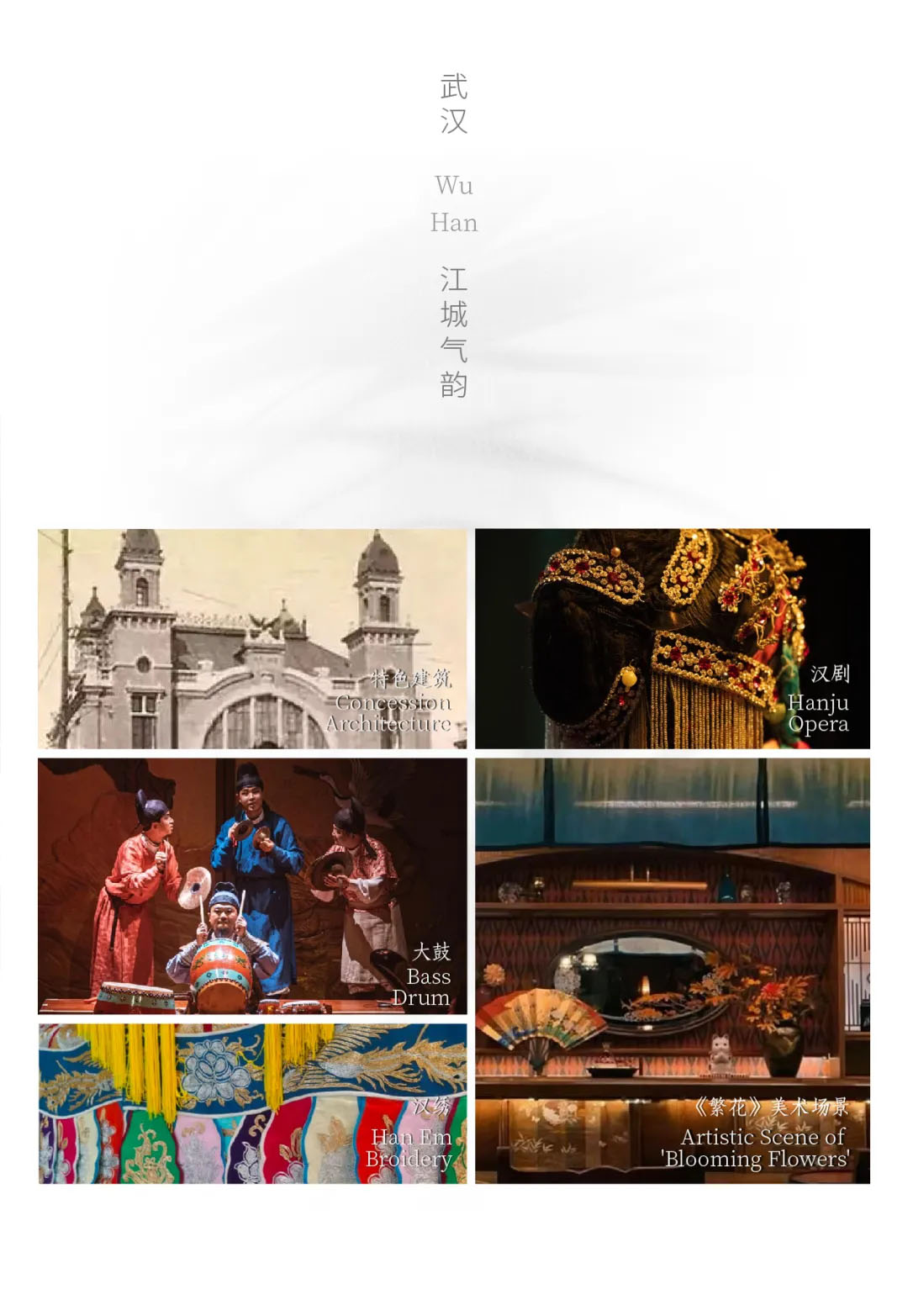
正如《繁花》中以细腻布景还原时代气息,此处亦以青石板、矩形漏窗和汉绣屏风,织就一幕幕可触可感的江城场景。
Much like Blossoms Shanghai’s meticulous recreation of era-specific atmospheres, here, bluestone pavers, rectangular lattice windows, and Han embroidery screens weave tangible scenes of Wuhan’s river city.


建筑为骨,细节为魂。禧樽的肌理中隐匿着与《繁花》美学同源的江城密码:檀木温润与玉石清冽,碰撞出雅致韵律;
Architecture forms the bones; details animate the soul. Hidden within Xizun’s textures lies a river city code akin to the aesthetics of Blossoms Shanghai: the warmth of sandalwood contrasts with the coolness of jade, creating an elegant rhythm.

烟熏灰的沉静、中国红的炽烈、仿铜金的暖煦,将吉祥寓意织入空间经纬——并非刻意装饰,而是文化本身的显影。
The tranquility of smoked gray, the fervor of Chinese red, and the warmth of copper-gold weave auspicious meanings into the fabric of the space—not as deliberate decoration, but as a revelation of culture itself.


色彩成为隐喻,以浓烈色调构建叙事张力:烟熏灰如江滩暮色,中国红似码头灯火,仿铜金若租界旧墙,诸色交织,共谱武汉的“城市色谱”。
Colors become metaphors, much like the narrative tension built through vibrant hues in Blossoms Shanghai: smoked gray resembles dusk over the riverbanks, Chinese red evokes the glow of port lights, and copper-gold echoes the aged walls of the concessions. Together, they compose Wuhan’s “urban color palette.”


暮色浸染江滩,江汉关钟声与老租界穹顶在晚风中依稀浮动。灯笼渐次点亮,温黄光晕拂过青砖、掠过水幕,“新楚菜,宴故知”的字样泛着柔光。
As dusk dyes the riverbanks, the chimes of Jianghan Custom House and the domes of the old concessions seem to float in the evening breeze. Lanterns gradually light up, their warm yellow glow brushing against blue bricks and gliding over water curtains. The words “New Chu Cuisine, Feasting Old Friends” emit a soft radiance.


真正的文化传承从不复刻过去,而是让历史成为当下的底蕴。
True cultural inheritance never replicates the past—it lets history become the foundation of the present.


正如《繁花》以现代影调重构时代记忆,这里亦以空间为语言,将建筑、江流、佳肴与美学,共同撰写成一个时代的东方故事。
Just as Blossoms Shanghai reconstructs era memories with modern cinematography, here, space becomes the language, weaving architecture, the river, cuisine, and aesthetics into an Eastern story of our time.


风拂过回廊,传来两江交汇的沉吟:
美,本就是生长于烟火中的诗。
The wind sweeps through the corridors, carrying the murmur of two converging rivers:
Beauty, in essence, is poetry born from the vibrancy of life.


来源:本文由刘道华建筑设计事务所提供稿件,所有著作权归属刘道华建筑设计事务所所有。
本文版权归腿腿教学网及原创作者所有,未经授权,谢绝转载。

猜你喜欢

BIM建筑|第一名方案|蒙古国新首都哈拉和林总体规划 / 中建设计+中国路桥+中交公规院

BIM建筑|2024,有方编辑部年度内容

BIM建筑|连绵的震撼:中国宣纸小镇国纸客厅及国纸水街 / 中国美院风景建筑设计研究总院

BIM建筑|上海久光中心,城北商业地标 / 日本设计+同济院+UNStudio

建筑赏析|GardenNomad,从一亩园到PudongVilla

BIM建筑|2025更新版!一份全球154座城市的建筑地图汇总送给你
最新课程


推荐专题


